Clutch named Propeller a top e-commerce developer for food & beverage in the United States
Food and beverage stores do not fail because the theme was ugly. They fail when packs, subscriptions, compliance, and checkout were treated as decorations on a generic Shopify build.

Clutch recognized Propeller among top e-commerce developers for food and beverage in the United States in 2026. We take that seriously for one reason: F&B commerce is operationally unforgiving. Variety packs, replenishment, age gates, club memberships, and retail-aware DTC all have to live in the same storefront without teaching the shopper to wait for a discount.
Propeller is not an offshore volume shop. We are a Santa Monica / Los Angeles commerce agency. The ranking is a national category filter. The work is still done the way we build every ambitious catalog: seniors in discovery, Shopify as a system, and post-launch ownership. See the Clutch profile for the listing. What follows is the proof you can click.
What this Clutch category should mean to a brand
A “top e-commerce developers” badge is only useful if you translate it into delivery questions. Can the team model pack architecture before they pick a theme? Do they know when a subscription app will fight the category? Will they still be on the account when a 3PL feed lies during a drop? Clutch is a credible way to compare firms. It cannot run your replenishment math.
We do not quote a Clutch rank or review tally we cannot show you on the profile. Use the badge to get us (and others) onto a shortlist. Then ask for the commerce decisions behind food and CPG and spirits and beverage work - not a reel of homepage animations.
F&B ecommerce is operations wearing a storefront
Two beverage brands can both say they need Shopify and mean opposite systems. One is selling impulse cans with variety packs and a subscribe cadence that has to match pantry reality. The other is selling allocations, tasting notes, and a club that cannot be a generic subscription SaaS with an age checkbox. Choosing the theme first is how you inherit workarounds at month six.
We start with how the business already sells: packs and bundles, wet/dry shipping, member inventory, wholesale beside DTC, and what happens after checkout. Shopify development is the expression of that model - not the model itself. That is also why we built BrewClub for alcohol subscription commerce instead of forcing every distillery onto a generic recurring-app pattern. The longer version lives in spirits club commerce on Shopify.
The work behind the ranking
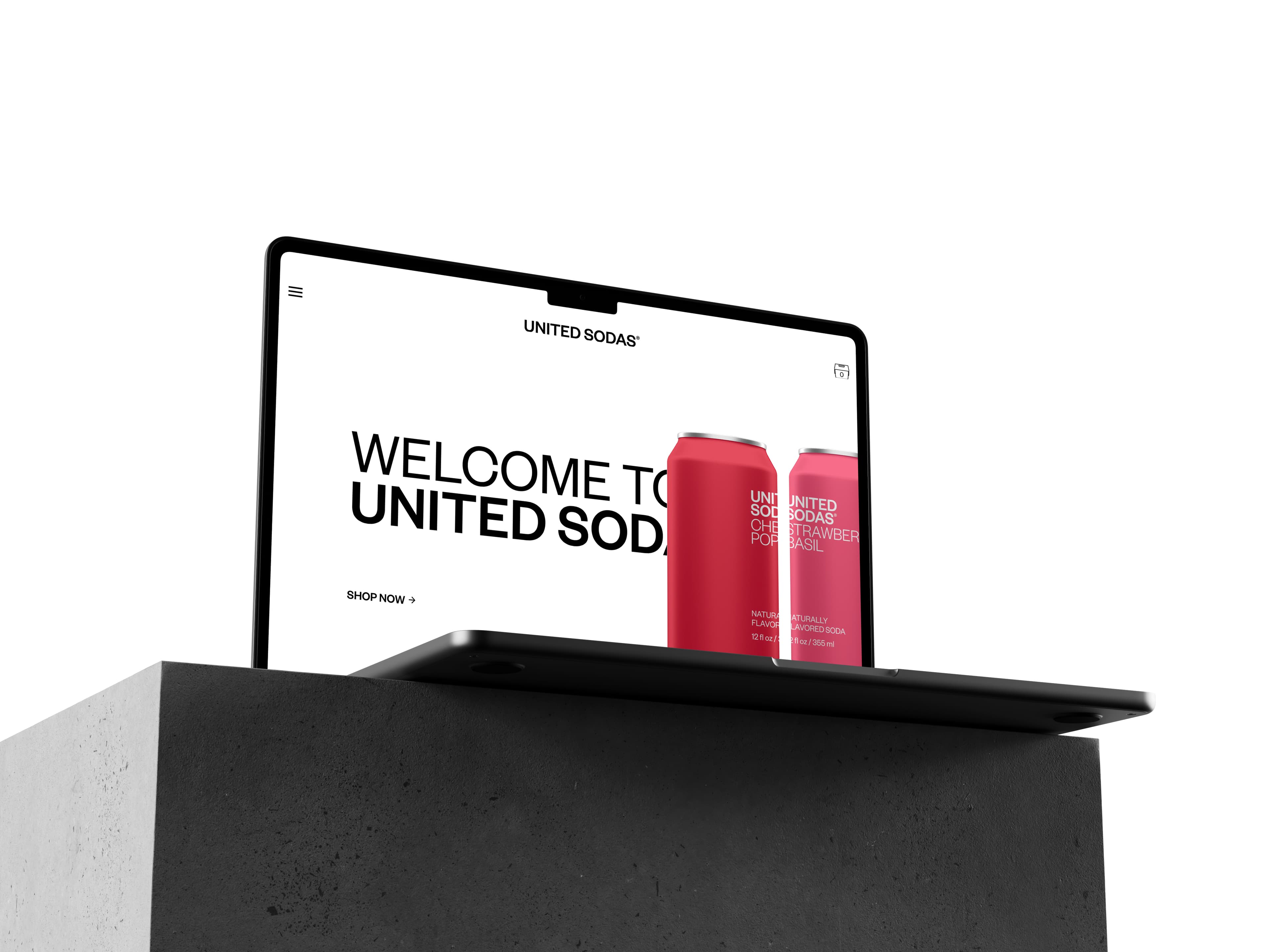
United Sodas needed editorial energy without sacrificing checkout or subscription economics. Returning revenue +41%. Checkout rate +29%. Subscribe rate +33%. That is CPG velocity: merchandising that still converts, a subscribe path a shopper understands in one scroll, and lifecycle that does not train discount hunting. The storefront had to feel like the pack in the fridge - not a template with soda photography dropped in.
Courage & Conviction is the high-consideration side of the same category family: American single malt, age-gated, brand-forward, built for loyalty. Conversion +30% in the first month after rebuild. Recovered carts +45%. Email revenue +58%. The storefront had to respect whisky culture - tasting notes, a purchase path that does not talk down to the drinker - and the lifecycle had to sound like the brand. That is ecommerce development plus retention, not a theme swap.
Bread & Butter Wines needed digital that matched retail energy: repeat purchase +36%, email revenue +48%, conversion +21%. Short consideration cycles. Bright, product-forward merchandising. Lifecycle that keeps the brand in orbit between bottles. Jinro needed a US commerce expression with SEO and social commerce wired to the same catalog - organic sessions +54% - in a competitive spirits market.
How we build F&B commerce from Santa Monica
Discovery names the operating constraints before anyone opens Figma. Then we design the catalog, the pack/bundle UX, and the checkout rules as one pass. Integrations to ERP and 3PL keep inventory honest when velocity spikes. Klaviyo follows real repurchase timing, not a 30-day default. For alcohol, compliance is UX and ops - we encode the rules your counsel and fulfillment partners set; we do not pretend to be either.
Post-launch is not a warranty PDF. Campaigns, new packs, club drops, and feed breakage all hit the same system. A US food and beverage brand hiring an ecommerce developer should know who picks up the phone when a subscription skip flow collides with a limited release. Propeller keeps Commerce, Experience, Growth, and Technology in one room so that call does not become a vendor round-robin.
Custom where the category requires it
“We can build it” is half an answer. The other half is whether the customization will survive the next platform upgrade. F&B is full of justified exceptions: member-only inventory, allocation waitlists, pack builders, age-aware checkout messaging. We prefer native Shopify and well-chosen apps until the workflow is genuinely unique. Then we isolate the logic - apps, checkout extensibility, or purpose-built software like BrewClub - so you are not trapped inside a one-off theme fork.
That is ecommerce development as architecture, not as an endless stack of patches. It is also why a national F&B ranking is only interesting if the studio has shipped both velocity CPG and high-consideration spirits. United Sodas and Courage & Conviction are not the same store. They are the same standard: the system matches how the brand actually sells.
Questions worth asking before you hire
- Why this platform for our packs, clubs, or allocations - not because Shopify is what you sell?
- How will the store talk to inventory, fulfillment, and subscription logic without spreadsheet gaps?
- What happens when we need something the theme and app store cannot do without making upgrades fragile?
- Can you show F&B work and explain what was actually hard - dual channel, age gates, replenishment, not just a pretty PDP?
- Who owns the store after launch when a 3PL, a club calendar, and a campaign all move in the same week?
Hire the system, not the badge
If you are looking for a top e-commerce developer for food and beverage in the United States, use Clutch to cut through interchangeable claims. Then hire the team that can hold merchandising, checkout, compliance, and lifecycle in one architecture. That is the work Propeller ships from Santa Monica for brands across the country.
Start a project if the catalog has to move cases, clubs, or cans without theater. See food and CPG or spirits and beverage for how we frame the category before we write a line of theme code.
10 min read · 3 parts
Questions
Did Propeller win a Clutch e-commerce developer ranking for food and beverage in the US?
Yes. Clutch recognized Propeller as a Top E-Commerce Developer for Food & Beverage in the United States. The listing of record is on our Clutch profile. We do not invent numeric ranks or review counts on this page.
Do you only build Shopify stores for California F&B brands?
No. The Clutch category is United States. We are based in Santa Monica / Los Angeles and build Shopify commerce for food, CPG, wine, and spirits brands nationally.
What makes food and beverage ecommerce different?
Packs, replenishment, retail-aware DTC, and - for alcohol - age gates, shipping eligibility, and club logic. A generic theme with product photos does not encode any of that.